Storm response · Summerville & Dorchester County
June through November, the Lowcountry collects its rent.
Hugo set the standard in 1989 and every season since has sent reminders. When a tree is on your house, call. When it’s merely on your lawn, read the part below about why patience pays.
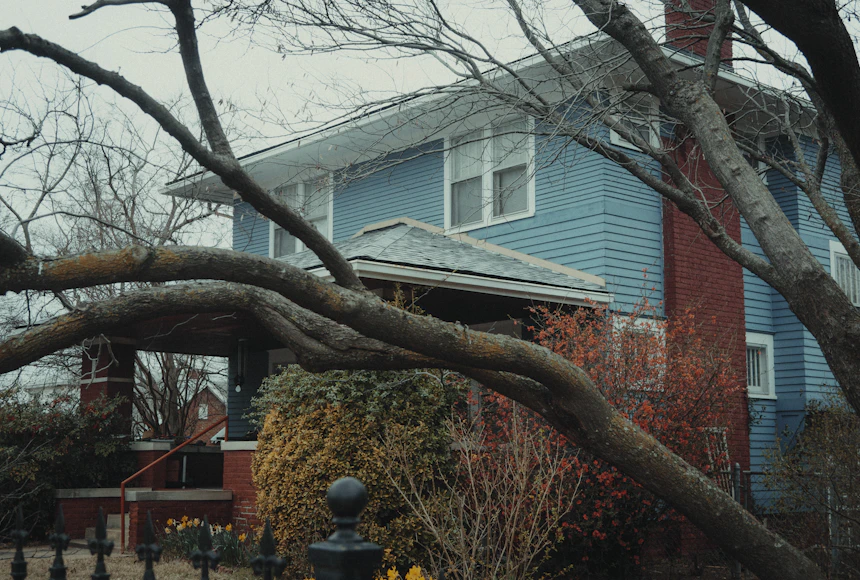
The triage rule, stated up front
After a real blow, everyone’s tree is an emergency to them — and we answer in the order that limits actual harm. A trunk through a roofline or resting on service wires comes first. A leaner held up by a healthy neighbor tree comes second, because “held up” is a temporary arrangement. A tree flat on open grass comes last, because it has finished falling and cannot do anything else wrong. When you call, you get a straight answer about which bucket you’re in and a realistic window — not a promise engineered to win the job and be broken by noon.
What storm work costs, honestly
Emergency work prices at two to three times normal rates. Not as a surge tactic — because the work itself changes. A storm-loaded tree is under tensions a standing tree doesn’t have; cutting one off a structure without making the damage worse is slow, deliberate rigging, often at odd hours, always in a queue of other wrecks. Here is the money-saving corollary we tell every caller: if the tree is down and done moving, it is no longer an emergency, and it shouldn’t be priced like one. Flag it for a normal removal visit the following week and the same wood costs a great deal less.
The insurance part
For a tree on a structure, your homeowner’s policy is usually in play, and the adjuster will want pictures before much gets moved. Photograph everything from several angles first. Our invoice itemizes the emergency cut-off separately from the haul-off and the stump, which is the format adjusters ask for anyway. We work for you, not the carrier — but we’ve made the paperwork painless often enough to know what it needs to say.
Getting ahead of the season
The cheapest storm call is the one that never happens. The trees that fail here fail predictably: overextended laurel-oak limbs, deadwood nobody cleared, pines that browned out in spring and stood dead into September, sweetgums on saturated ground. A pruning pass in the quiet months takes most of that risk off the table, and a walk-around visit before June costs you nothing but the phone call. One more Summerville wrinkle: a storm-wrecked tree over 8″ still needs the town’s removal permit, but the ordinance has an emergency-conditions provision and hazard trees move fast — we handle the filing while the saws are being fueled. Details in the permit guide.
Storm line is the same line.
Describe what fell and what it’s touching. You’ll get your place in line and a real window — day or night during storm weeks.